
The Revenue Diagnostic
Find out what your revenue operation is actually costing you.
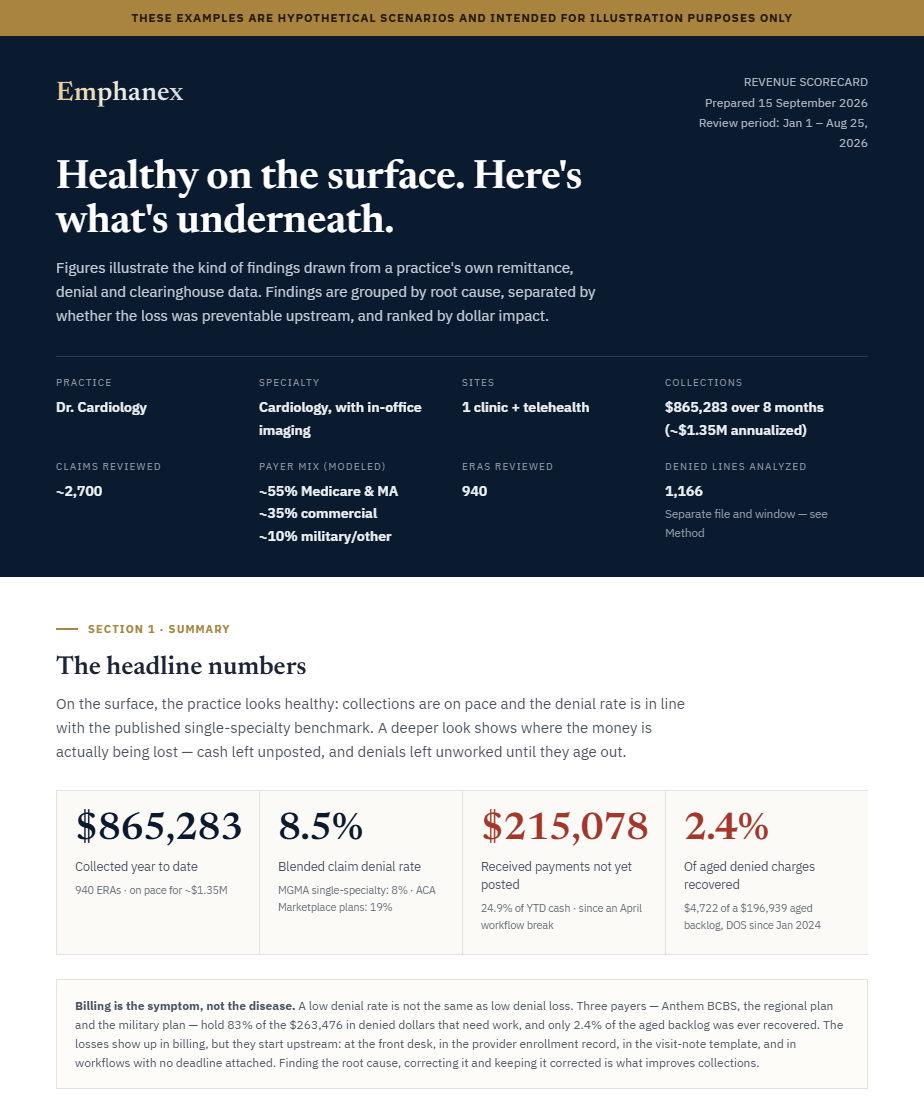
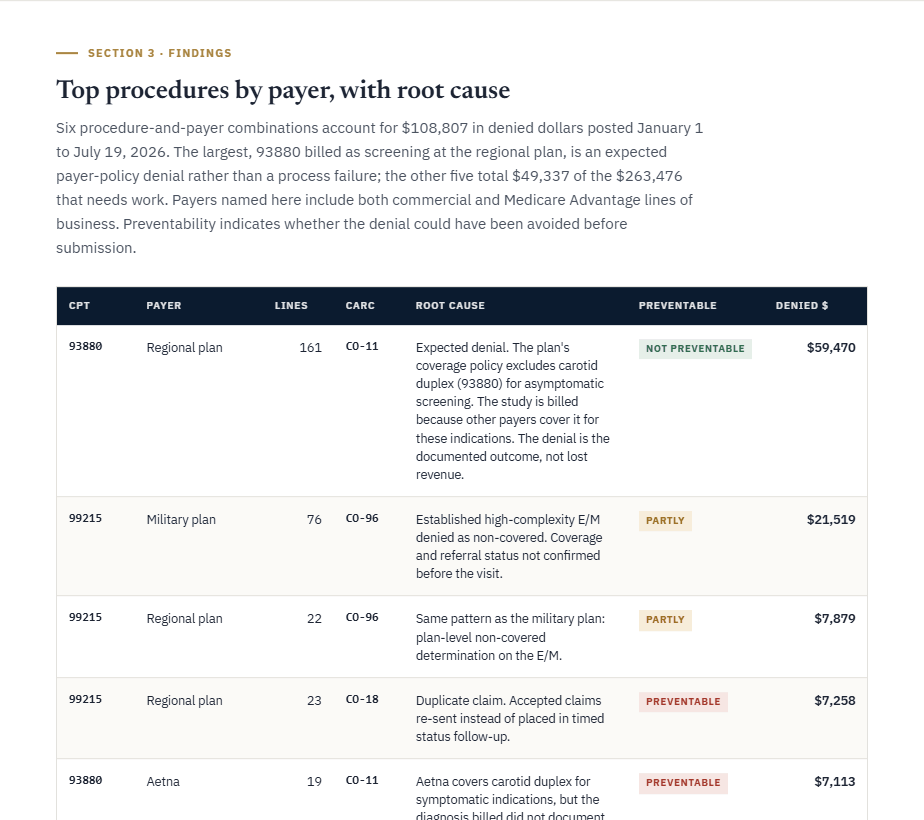
A fixed‑scope assessment of your denials, your payers, and the process that produces them — including where the operation depends on work that isn’t visible, documented, or shared. You get a scorecard with findings traced to the claim line, what the biggest problems cost, and what to do about each one.
Scoped to your practice · Findings in 4–6 weeks
Take the 2-minute Maturity AssessmentWhat we deliver
-
01
Current-state assessment of the workflow from registration through payment posting and AR
-
02
Identified problems and their root causes — not symptoms, causes
-
03
Estimated financial impact of the highest-priority issues, based on the data available during the assessment
-
04
A prioritized corrective-action plan, each item naming what's required to close it
Remaining issues appear in the findings ranked by severity, without a dollar figure. We quantify what the data supports and say so plainly when it doesn't.
The scorecard
What it doesn't include
We don't work your AR, file your appeals, or submit corrected claims.
The Diagnostic tells you what to fix and what it's worth. If you want the tools and training to fix it, that's the next engagement — and it's scoped from what we find, not sold upfront.
Pricing
What does it cost?
Engagements are scoped to the size of your practice and what your data can support, so we quote after a short conversation rather than before one. Most Diagnostics run four to six weeks from the point we have a complete data set.
We don't bill claims, which means the Diagnostic is the work itself rather than a step toward a longer contract. What we find is what we report.
Getting the data
Getting the data is our job, not yours.
Most practice management systems don't make this easy, and nobody on your team has a free week to figure it out. We schedule thirty minutes with whoever runs your reports, share a screen, and walk through exactly what to pull. You'll have it done before the call ends.
We work with what your system can produce. If it can't support a piece of the analysis, we tell you upfront and adjust the scope rather than guessing.